 |
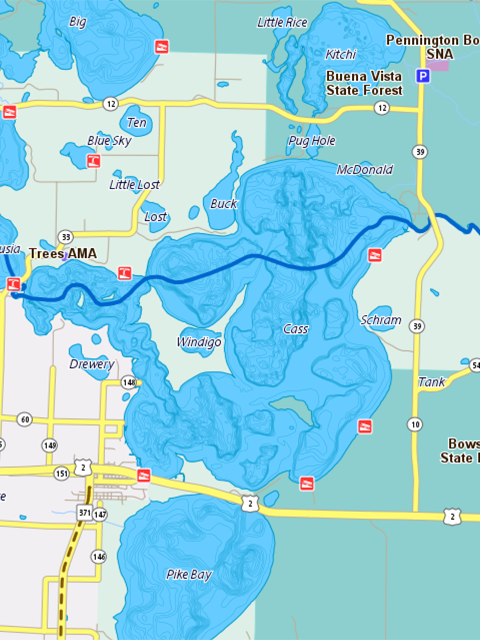
Cass Lake, Centrally located in Northern Minnesota’s “Big Water” territory is the smallest among a group of “Mega Walleye Factory Lakes”. Like it’s larger cousins Lake Winnibigoshish, Leech and Red Lakes, Cass Lake offers top notch Walleye fishing with a strong supporting cast of Muskies, Jumbo Perch and Panfish. At roughly 16,000 Acres, Cass offers plenty of room to move around, but with islands, small bays and connecting lakes, this big lake can be more inviting, even friendly compared to it’s larger cousins. Star Island even contains it’s own little lake called Windigo. Connecting to Lakes Kitchi, Andrusia and Pike Bay, this chain of lakes appeals to folks who like to explore new territory. The makeup of Cass Lake is quite different from most of the other major Walleye waters in that there can be good fishing on structure that varies from a few feet of water to habitat as deep as 70 feet, maybe even deeper. There are several large, shallow sand flats that separate one basin from another and as you move across each flat and into the next deeper hole, it’s like moving to another new lake. Each of these smaller basins has it’s own structure along with it’s own “local” population of fish. It’s not uncommon to find Walleye using 12 feet of water in one section while they are using 40 feet of water in another section. Clever fishing parties check a variety of locations and try several techniques in each area. Spring: Walleyes on Cass Lake migrate toward a variety of current areas during the spring spawning season. One obvious area is the inlet of the Mississippi River from Lake Andrusia and another is the outlet at the Knutson Dam. There are however, many areas where current is produced by narrows between islands, points or the connecting passages between lakes. After the spawning season passes, fish will linger in these areas to feed in the shallow water and remain until fishing pressure and predators drive them into heavier cover and/or deeper water. During the early season, fishing many of the lakes shoreline related points that extend into deeper water are good starting spots as are the shoreline drop off areas where new weeds are “greening up”. Many of these areas will consist of shallow water flats that suddenly break into deeper water. This makes Cass Lake a good choice for folks who like to position the boat within cast distance of these structures and walk a jig and minnow combination down the point and into deeper portions of the structure. Walleye will typically gather on small portions of the structure, so this position casting can work better than trolling or drifting. Click on Map Images for links. Click on lake name for link to the Minnesota DNR Lakefinder. The link will jump directly to the Cass Lake Information Page . Click Here to >> Book A Guided Fishing Trip On Cass Lake . |
During summer, Walleye tend to scatter. Some fish will remain in the shallow weeds, some move onto mid-lake structures and still others make use of deep points and inside corners located along the lakes steep shelves. Many anglers agree that Muskies play a role in determining Walleye locations. During periods of high Musky activity, I like to look in deeper water for Walleye. When Musky reports are slow, I tend to fish shallower spots more often. Presentations during this warm water period favor live bait rigs or spinners with Night Crawlers or large minnows. Creek Chubs, Redtails and big Rainbows work well and for all around reliability, Night Crawlers are tough to beat. In fact, I’ve seen folks using crawlers and catching fish well into the fall when most other lakes are back onto the jig and minnow bite. I would never show up at Cass Lake without Crawlers in my arsenal. Late summer and early fall Walleye action will intensify in the depths. Water depths of 70 feet and more can and do hold large numbers of fish. At first it seems impossible to zero in on these deep water fish, but with practice, you’ll learn that slowly cruising the deep breakline and watching your electronics for any sign of life will help get you started. More often than not, finding a school of baitfish on one of the deep points or inside corners is the key to locating feeding fish. With good boat control and ideal wind conditions, you could fish these spots with live bait rigs, but most often a jig and minnow fished vertically below the boat is the most effective way to stay with these deep fish. Known also for its Jumbo Perch fishing, Cass Lake has turned out some really great catches of Perch. The better Perch fishing is usually found in fairly shallow water and occasionally in the super shallow water right up on top of the sand flats. Small patches of weeds or mixed gravel/rock will help keep Perch locked in an area. It’s common to locate small groups of fish in these shallow locations by cruising the shallow water on a calm day and spotting fish as they move away from the boat. Most folks like to anchor the boat and fish with small jig & minnow combinations. At times, you’ll find Perch in and around heavier weed cover in the 10 to 16 foot ranges as well. This is particularly true in the bays and shallower portions of the lake. Traditional thinking is to find and fish the heavier weeds patches, but don’t overlook the sand breaks adjacent to the deep holes. Long casts high onto the shallow sand flats trigger Muskies as the bait passes over the sharp break where these fish can be intercepted as they cruise from one area to another. Top water baits are perfect for this as are the more traditional bucktails.
When Muskies go on a feeding binge, they are generally located in
deeper, open-water where the forage suits their needs. Whitefish,
Tulibee and Suckers provide a nice one gulp meal. Trolling over open
water with large deep diving crankbaits will trigger these aggressive
feeders. Try using some of the high quality Musky baits in Salmo’s
lineup. The Whitefish is a favorite of mine, but you’ll find lots of
excellent running baits to choose from. During most of the summer, a reliable approach for Bass fishing would be to target the Bulrush patches that are found adjacent to deeper water. Avoid the patches you find that are way up on top of the shallow flats and seek out the patches that are located closer to the drop off edges where the fish have a deep escape route. Spinnerbaits and soft plastics are good all around presentations in these areas. There’s a lot more to be said about fishing this great Northern
Minnesota gem. From it’s wonderful sand beaches, clear water and great
fishing to it’s convenient location and wide array of lodging options,
Cass Lake is one that deserves a close look for your next fishing
getaway. |
|
|
|
| See More Fishing Articles, Fishing Reports and Fishing Videos click >> Fishing Archives Section . | |
Home | Current Fishing Report | Fishing Report Archives | Favorite Lakes | Fishing Articles Section | Fishing Pictures | Recipes | Rates Services | Gift Certificates | Contact Us | For Sale | Links | Sitemap |
The Early Bird Fishing Guide, Jeff Sundin - 44076 Co Rd 128, Deer River, MN 56636
218-246-2375 Email copyright©2013 Jeff Sundin All Rights Reserved  Web Design last revised 4-21-2013